 US
US
 China
China


100% Dynamic Testing
In the industry of component manufacturing, particularly for reed relays, thorough testing is critical to ensure that products meet the stringent demands of users. The effectiveness and reliability of these components can significantly impact the performance of the final product, making comprehensive testing an indispensable part of the manufacturing process.
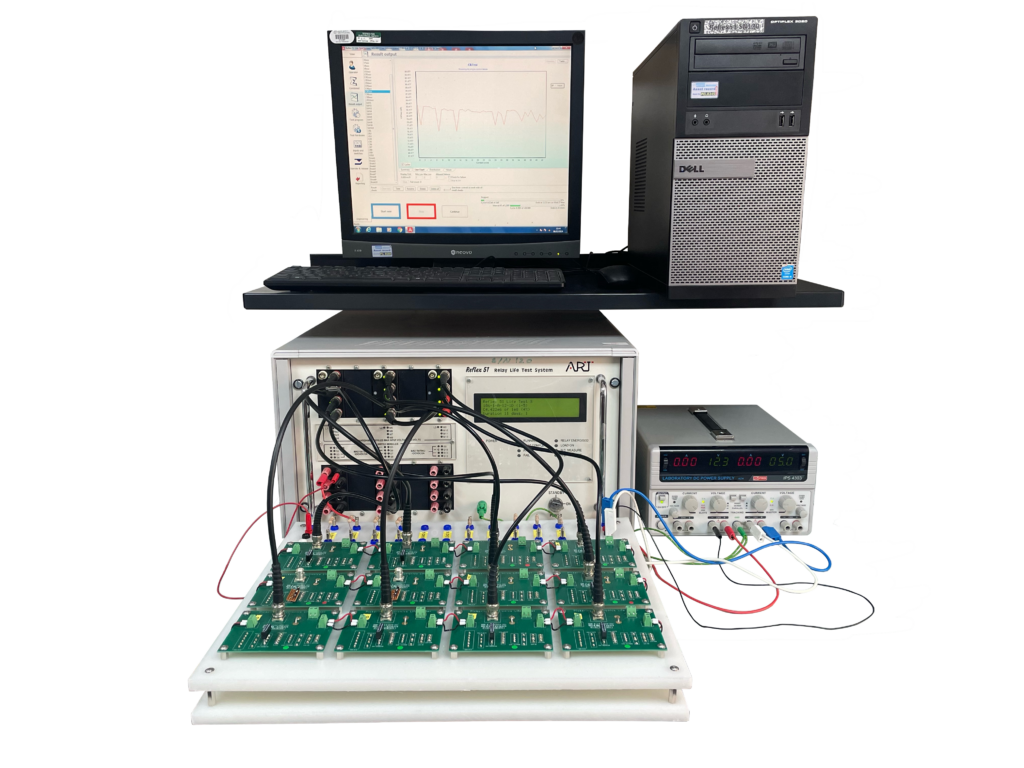
The True Cost of Inadequate Testing
While extensive testing can add to manufacturing costs, simplifying or reducing testing to cut expenses often leads to greater costs down the line. For instance, some manufacturers might opt for batch testing, where only a percentage of the produced parts are tested, assuming the untested parts will perform similarly. This method, though cost-effective initially, is flawed. It often leads to early failures in the field and increased costs associated with replacing non-functional parts during assembly, nullifying any initial savings.
Even claims of “100% testing” can be misleading if only basic tests are conducted. For low-cost reed relays, this might just involve applying nominal coil voltage and checking for continuity to ensure the switch closes. This minimal approach fails to guarantee the relay’s performance in real-world applications, disappointing users who rely on specific relay functionalities.
Comprehensive Testing Parameters
To ensure a reed relay performs as expected and has a long operational life, all key parameters must be rigorously tested:
- Coil Resistance: Ensures the correct coil is used.
- Back EMF Diode: Verifies proper orientation if included.
- Operate and Release Times/Voltages: Confirms the device meets rated specifications and that the correct sensitivity reed switch is installed, along with any necessary magnetic shielding.
- Static and Dynamic Contact Resistance: Ensures specification compliance and detects potential damage to the reed switch, such as issues with plating or blade alignment.
- Standoff Voltage (for high voltage relays): Checks that the relay meets voltage specifications, critical to detect if the glass-to-metal seal is damaged.
- Insulation Resistance: Ensures no leakage current issues between the coil and switch, and across the open switch.
For more comprehensive information on Pickering’s testing methods, please click here.
Some parameters might require more time-intensive testing, such as low thermal EMF performance, which can take 20-30 minutes per relay. In such cases, manufacturers should ensure rigorous construction processes and conduct sample testing to confirm quality.
Monitoring and Quality Control
High-end reed relay manufacturers don’t stop at testing. They also record and analyze test results, monitor yields, and perform extended sample testing. Consistent yields below 90% indicate potential issues, and any losses over 3% necessitate investigation.
Moreover, it’s crucial to monitor for consistency across batches. Significant changes in parameters, even if within specification, suggest changes in the manufacturing process or materials that need addressing. For instance, if the typical operate voltage for a relay is 3V and a batch shows 2V, even within a 3.75V limit, it indicates a significant change that warrants investigation. Ensuring that each relay matches the performance of the first one designed into an application is vital for maintaining trust and reliability.
Conclusion
Comprehensive testing and stringent quality control are essential for producing high-performance reed relays. While these processes increase manufacturing costs, they ensure reliability and longevity, saving users from the higher costs associated with field failures and replacements. For manufacturers committed to quality, the investment in thorough testing is a necessary expense that pays off in product performance and customer satisfaction. At Pickering, we believe in the importance of 100% dynamic testing and result analysis to ensure our reed relays meet the highest standards, providing reliable and consistent performance for our customers.