 US
US
 China
China


Instrumentation Grade Relay Switches
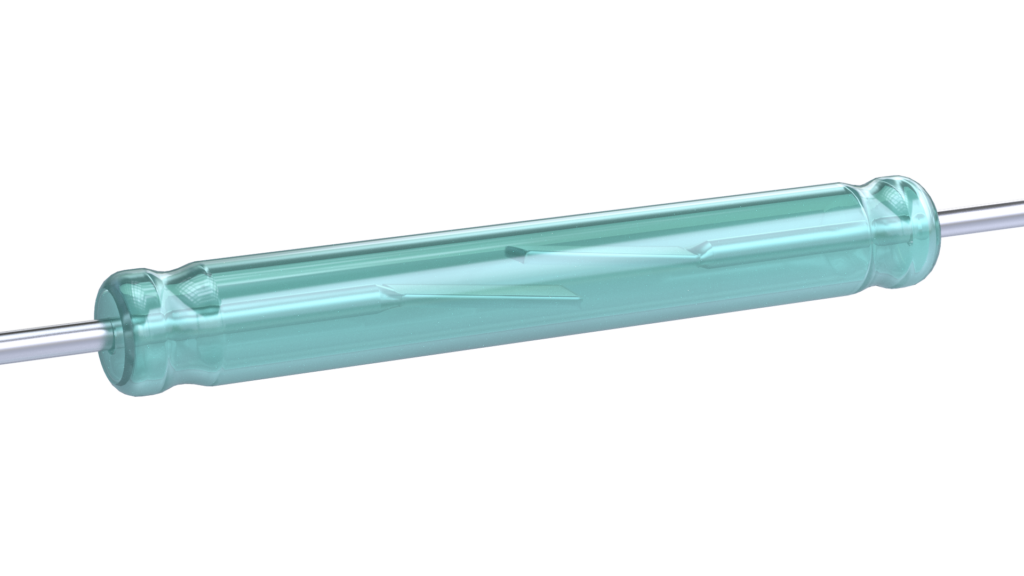
Basic Reed Switches
Basic reed switches are used in applications where simple on/off functionality is sufficient, and factors like contact resistance and stability are not critical. These applications might include:- Domestic appliances
- Security sensors
- Children’s toys
General Purpose Reed Switches
The next grade up includes general purpose reed switches. These are made with more controls in place compared to basic switches but often involve relatively low-cost plating methods. Sometimes, these switches are actually rejects from the production of instrumentation grade reed switches. They may be assigned the same specifications as higher quality switches, but they have defects such as:
- Poor alignment of contact blades
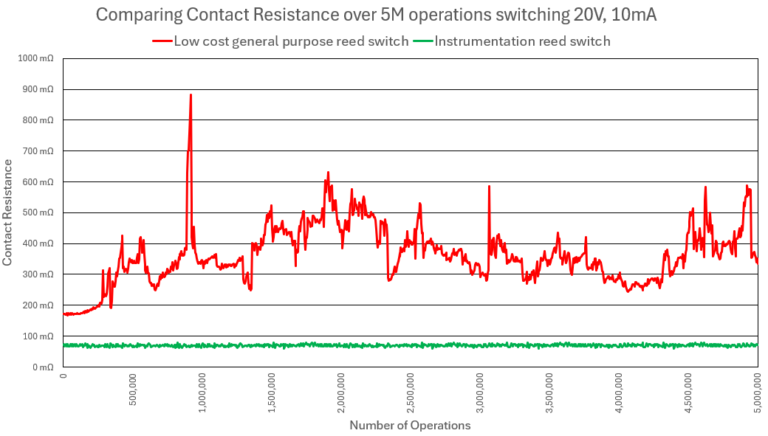
- Much higher contact resistance
- Poor contact resistance stability
- Degraded sealing
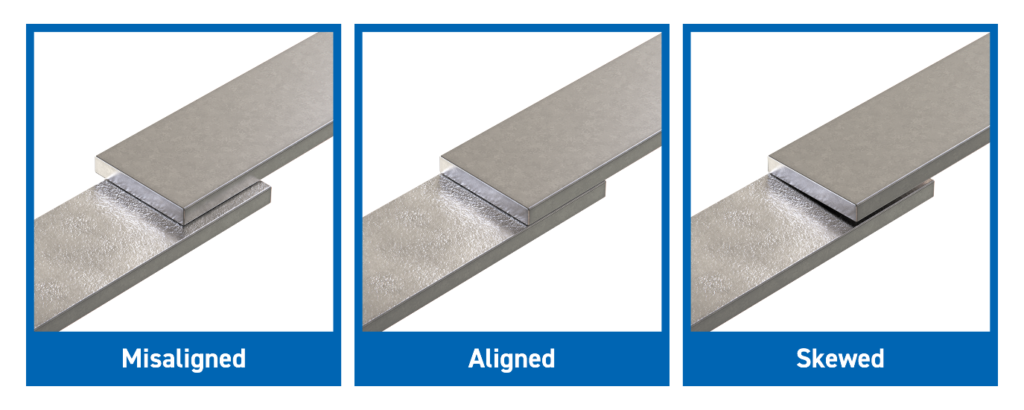
The poor alignment of contact blades forces the current down a smaller contact point than intended, which can cause the material to melt and leave contact welds, drastically reducing the performance of the switch.
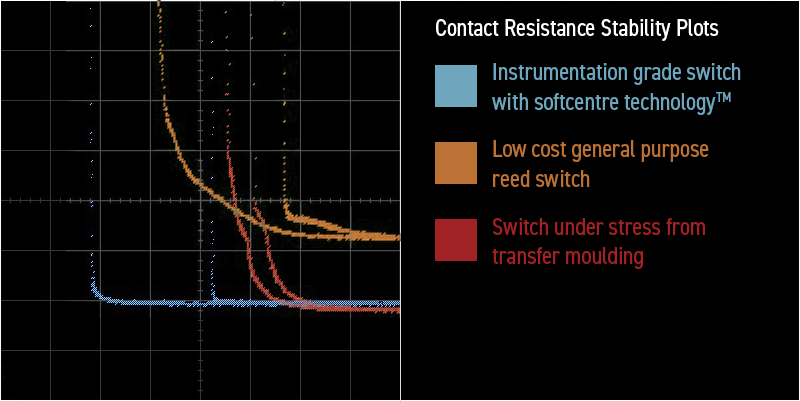
This chart shows the contact stability test results of three new, unused reed relays. The Instrumentation grade switch shows a sharp transition from a high resistance state (open contact) to a low resistance state (closed contact). This indicates that the relay switch is operating quickly and cleanly, which is essential for precise and reliable switching. After the transition, the graph settles at a low resistance value. Low and stable contact resistance is crucial for minimizing power loss and ensuring efficient operation in circuits, especially when dealing with low voltage and low current signals.
Meanwhile, the gradual, delayed transition of the other switches indicates that the relay contacts are not closing as quickly or cleanly. This can cause slower switching times, which may be unsuitable for applications requiring fast response. The presence of multiple lines or paths during the transition suggests inconsistent switching behavior. This could be due to poor contact quality, misalignment, or other mechanical issues within the relay. Such inconsistency can compromise the reliability and repeatability of the relay’s performance. After the initial transition, there also appears to be more residual noise and fluctuation, which suggests the relay will not perform at maximum efficiency.
General purpose reed switches are adequate for applications where performance requirements are moderate and cost is a significant factor. This includes some consumer electronics and simple reed relay applications where high performance and long life expectancy are not critical.
Instrumentation Grade Reed Switches
At the highest level of quality are instrumentation grade reed switches. These are manufactured to the most stringent standards, ensuring the best possible performance and longevity. The process includes:
- Advanced plating methods like sputtering or high-quality electroplating, resulting in consistent plating across contact surfaces.
- Tight tolerances in blade alignment and sealing, ensuring better contact performance.
- Use of pure inert gases or a deep vacuum during sealing to prevent contamination.
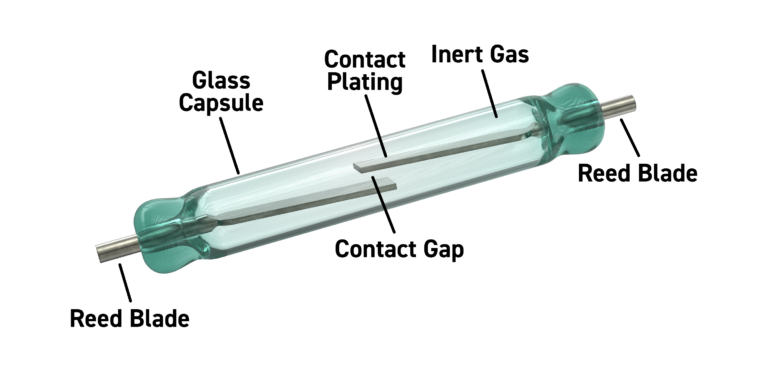
These high standards result in a reed switch that offers superior performance and a longer lifespan, making them ideal for demanding applications where reliability and precision are paramount.
Choosing the Right Reed Relay for Demanding Applications
When selecting a reed relay for critical applications, it’s essential to ensure that the reed switches used are of the highest quality. In a price-sensitive industry, some manufacturers might use lower-grade reed switches to reduce costs. While this may be acceptable for low-cost equipment, it is not suitable for applications that require the highest quality and reliability.
At Pickering, we understand the importance of using instrumentation grade reed switches in our reed relays. Our commitment to quality ensures that our products deliver the best performance and longest life possible, making them the right choice for demanding applications. Ensure your chosen reed relay meets the highest standards by opting for Pickering’s instrumentation grade solutions.