 US
 China


Case Study: Increasing reliability and reducing costs for an ATE manufacturer
Quick Look
- Customer: A well-known OEM of flying probe and functional test systems.
- Requirement: Having discovered that using low-cost parts was a false economy – due to failures and inconsistent performance – the customer needed a high-reliability, pin-compatible replacement. They then wanted shorter operating times.
- Challenge: The main challenge was to shorten the operating times without increasing current draw.
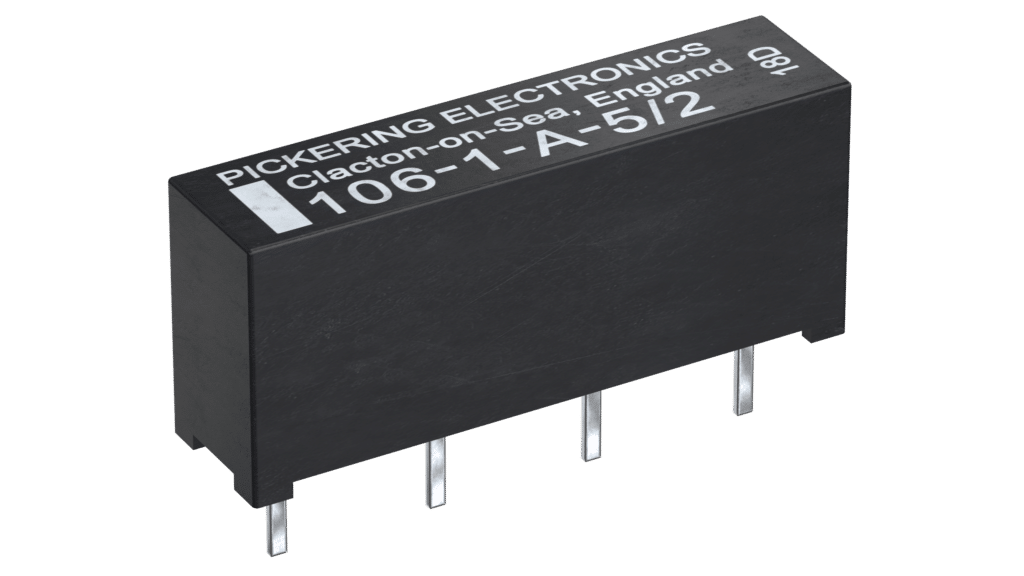
- Solution: The 106-1-A-5/2 was customized with a more sensitive reed switch.
- Result: The custom parts cured all problems the customer had been facing, and the operating time was reduced by nearly 25%. This gave the customer a competitive advantage over its competitors.
- Relay Type: A custom device based on the 106-1-A-5/2 and branded with the customer’s logo.
The Customer

The customer is an OEM of automated test equipment, including flying-probe and functional test systems used for production testing of printed circuit board assemblies.
Many of these systems use relay-based switching matrices to route signals between the PCBA under test, signal sources and measurement instruments. Reliable, repeatable and fast relay operation is therefore essential to maintaining test throughput and confidence in the results.
The Requirement
The customer urgently needed a replacement for a low-cost 0.2” pitch single-in-line (SIL) reed relay that had been designed, in quantity, into a switching matrix but was proving to be unreliable. Specifically, about 5% of the devices received from the incumbent supplier did not work at all. For those that did, when they were mounted on the matrix circuit board they exhibited:
5% failed on receipt
Intermittent operation
Inconsistent operate and release times
Variable contact resistance
In addition, the contact resistance of the low-cost devices varied. In cases where precision measurements need to be taken – for example, a small current or voltage needs to be recorded with high accuracy – it is essential that any inline resistance (including through the reed relay) is consistently low.
Although compact reed relays may appear similar in size and specification, not all high-density reed relays perform the same once incorporated into a precision measurement system.
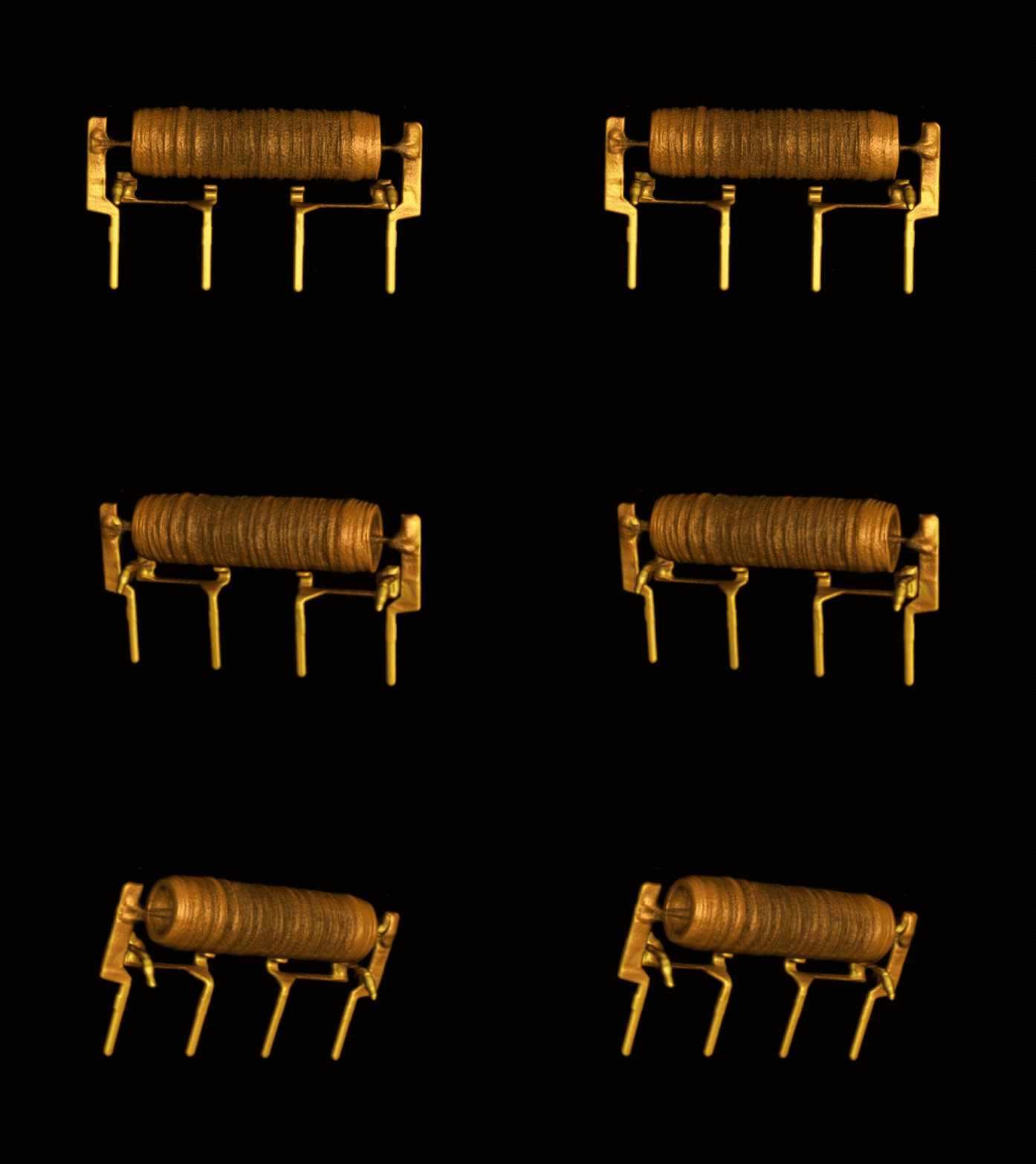
CT scan of the low-cost 0.2″ SIL reed relay supplied to Pickering for evaluation.
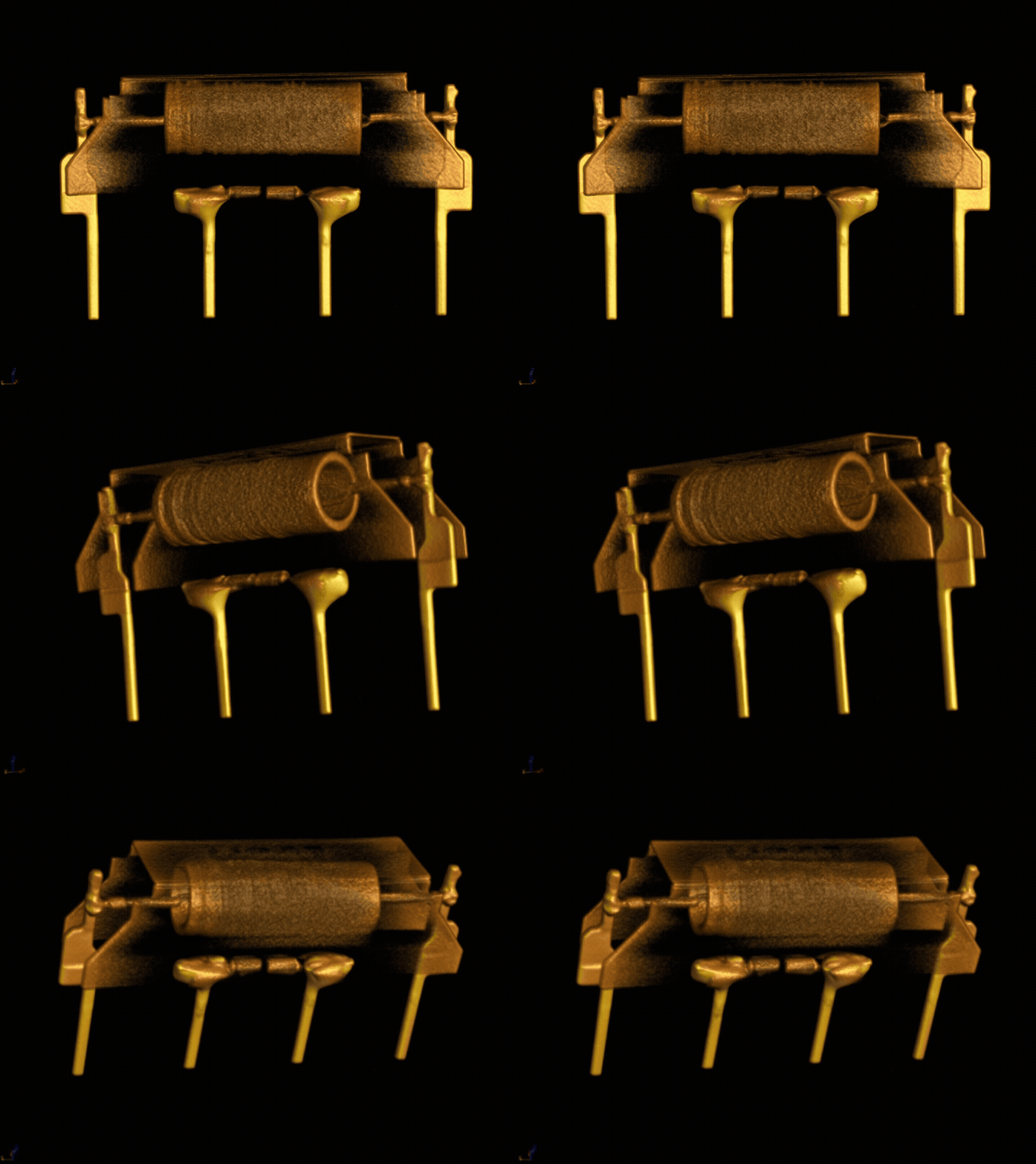
CT scan of the Pickering 106 reed relay, showing internal magnetic screening and more controlled construction.
The OEM initially approached Pickering for advice on the above problems and supplied 25 of the low-cost reed relays for evaluation. They were brand new, and here’s what Pickering discovered through examination and test:
- The devices incorporated low-cost general purpose reed switches, rather than instrumentation-grade ones.
- The switches appeared to have a wide sensitivity range and responded to a relatively wide range of (coil) operating voltages, with varying operating and release times. Essentially, they exhibited very poor stability.
- The contact resistance of these brand-new parts measured more than 0.2Ω – a resistance Pickering considers as marking the end of life for any reed relay that is to be used in any form of precision measurement application.
- A relatively large (thick material) coil bobbin was present around the reed switch. In small devices, a large bobbin limits the number of coil windings. As a consequence, a very sensitive switch is needed, leading to instability (as per point 2).
- As is common with many low-cost reed relays, the devices were not fitted with a magnetic shield. This was particularly significant because the OEM installed the relays closely together on densely populated matrix cards.
When reed relays are stacked side by side, the magnetic field generated by one coil can influence nearby devices. During testing, this magnetic interaction caused variations of up to 45% in the operate voltage. In some cases, the voltage required to operate the relay exceeded its nominal 5 V coil rating.
This level of magnetic interaction could lead to unpredictable operation, particularly when several adjacent relays are energised at the same time. Of the 25 new reed relays supplied by the customer and tested by Pickering one did not work at all: echoing the customer’s observed 5% failure rate. This is indicative of batch testing before shipment, as opposed to testing 100% of the devices (which is Pickering’s policy).
The Challenge
Clearly, the redeeming feature of the original reed relays was the low cost. However, the customer reported that any cost savings made were quickly lost through having to rework the switching matrix PCBs when non-functioning reed relays were discovered. Moreover, because of the wide operational characteristics and the fact that closely stacked devices sometimes did not operate, the overall result was inconsistent – and therefore untrustworthy – performance of the customer’s switching matrix.
With the switching matrix PCB already built, and a redesign set to incur additional costs, the customer needed a high reliability, pin compatible solution as soon as possible.
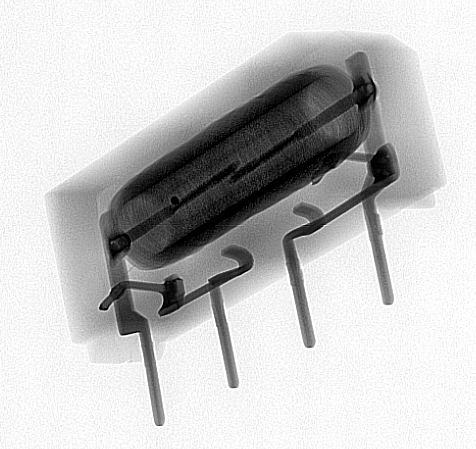
X-ray of the low-cost 0.2″ SIL reed relay supplied to Pickering for evaluation.
The Solution
Pickering initially suggested the customer try a 106-1-A-5/2, as it is both size- and pin-compatible with the customer’s original device but has an instrumentation-grade reed switch plus an internal magnetic screen. Pickering utilize more efficient, formerless coils enabling the use of tighter sensitivity band, and so more consistent parameters. Devices were supplied and the customer saw immediate benefits, as all the above problems were solved.
After a while, having reaped the benefits and cost savings of the Pickering relays compared to the previous brand, the customer asked if it would be possible to shorten the operating times, as even a minor improvement would enable end-users to speed up their tests, therefore making them more efficient.
Normally, the easiest way to speed up reed relay operating times is to increase the coil drive as this increases the magnetic field strength, and the reeds will be drawn together faster. This usually requires reducing the coil resistance to increase the current flowing through the coil. However, because a large number of reed relays could potentially be operating at the same time, this would increase the current draw for the entire switch matrix. The customer did not want this.
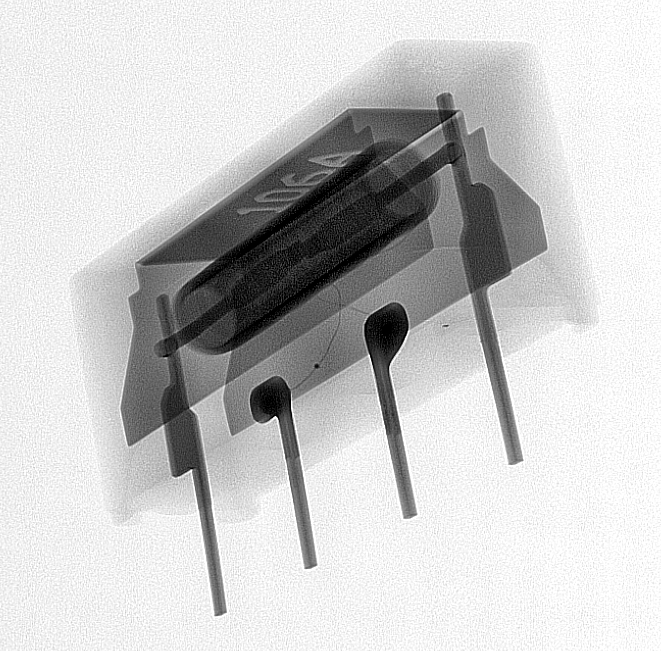
X-ray of the Pickering 106 reed relay, showing internal magnetic screening and more controlled construction.
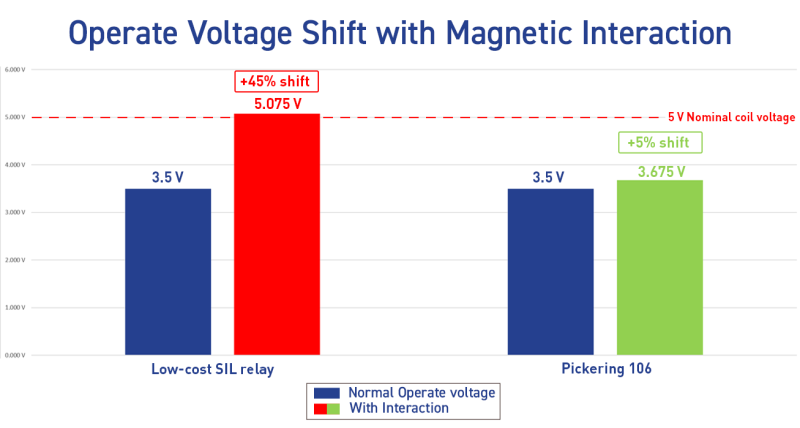
Magnetic interaction increased the low-cost relay’s operate voltage by 45%, pushing it above the nominal 5 V coil supply. The screened Pickering 106 showed a much smaller 5% shift.
Pickering normally selects the least sensitive instrumentation-grade reed switch compatible with the required coil resistance and operating margin. For the custom version, engineers selected a slightly more sensitive but tightly controlled switch band. This reduced typical operate time from 0.195ms to 0.152ms without changing the coil or increasing current draw.
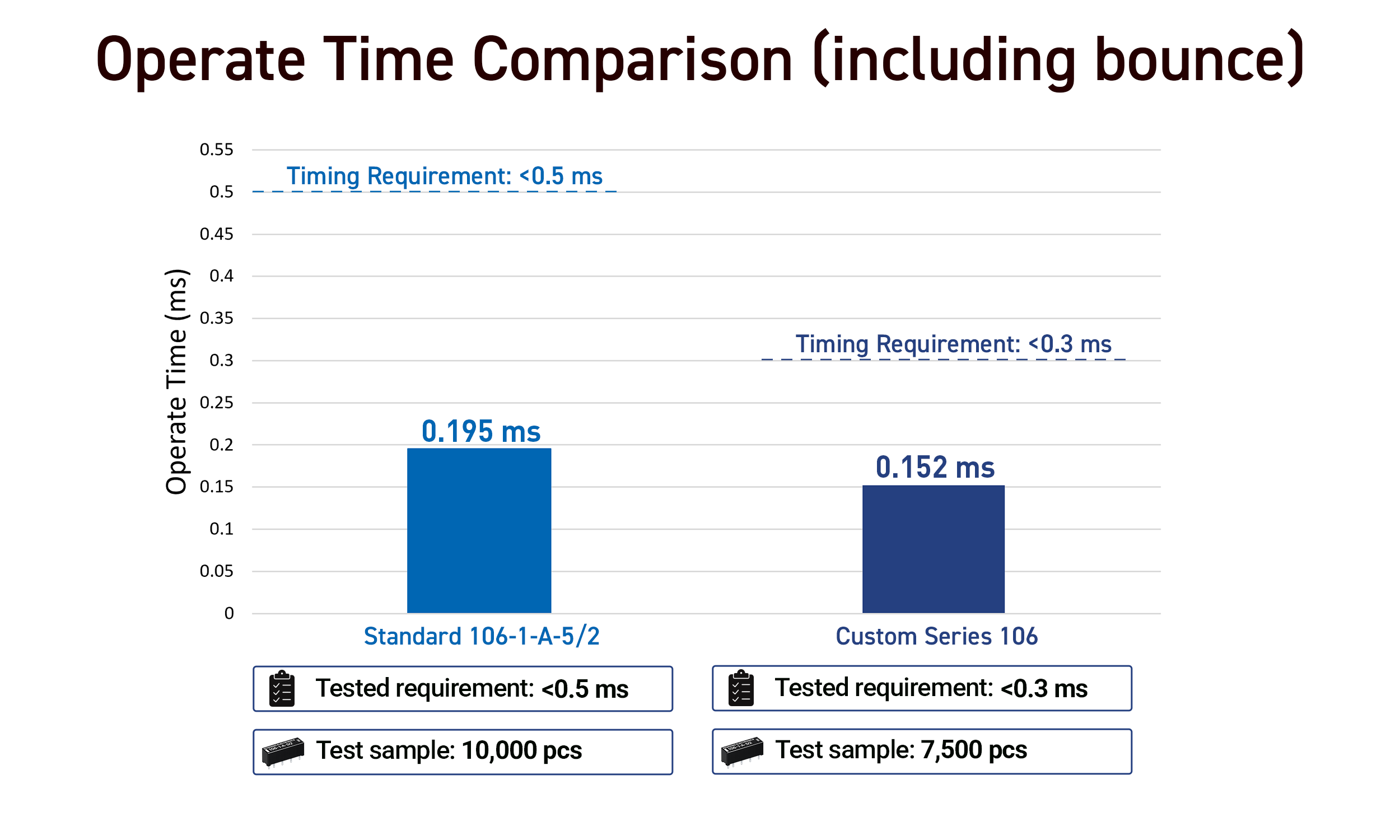
The custom 106-1-A-5 reduced typical operate time from 0.195 ms to 0.152 ms, while meeting a tighter tested requirement of <0.3 ms.
Lower typical operate time with a tighter timing requirement
The custom relay’s typical operate time is approximately 25% lower than the standard part.
The Result
The custom device proved to be of great benefit to the customer. They had far fewer device failures during production and, importantly, in the field. The improved reliability alone proved that the original low-cost parts truly had been a false economy.
Also, the increased operating speed of the reed relays – and therefore the switching matrix – gave the customer a competitive advantage over its competitors.
The Relay Type
As mentioned, the custom device was based on the 106-1-A-5/2 and fitted with a more sensitive (but still instrumentation-grade) reed switch.
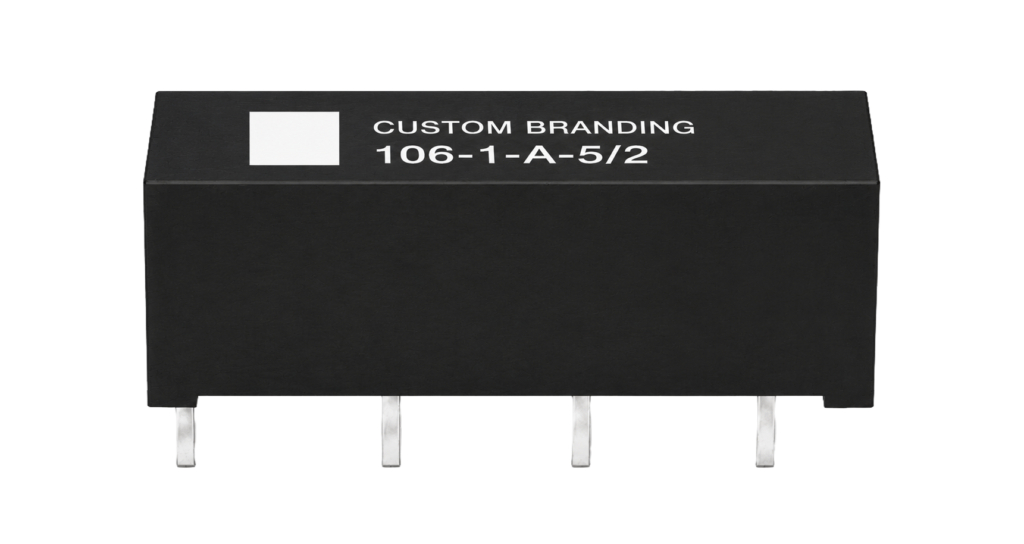
The custom part was assigned a special part number and dedicated test specification to ensure all parts sent to the customer would consistently meet the agreed timing requirement. In addition, the customer’s logo was printed on the device as opposed to Pickering’s.
In conclusion, all the work Pickering performed was firmly based around the science of reed relays and drew on the expertise of Pickering’s engineers, who are able to get the very best out of the sub-components (reed switch, coil etc.) to craft truly fit-for-purpose devices with a genuine lower total cost of ownership.

Facing relay failures or inconsistent switching performance? Our engineers can help you identify the cause and develop a reliable reed relay solution for your switching requirements.